
The Hong Kong University of Science and Technology
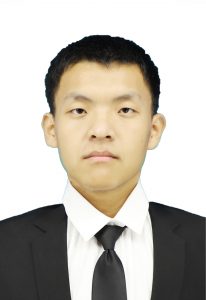
SHEN Yajing(申亞京)
Prof. Yajing Shen received his B.S. (2005) and M.S. (2008) degrees from Xi’an Jiaotong University, and his PhD (2012) from Fukuda Lab at Nagoya University, Japan. He is currently a Professor in the Department of Electronic and Computer Engineering and has served as the Associate Director of Cheng Kar-Shun Robotics Institute, Associate Director of HKUST-BYD Embodied AI Joint Laboratory, Founding Director of the Center for Smart Manufacturing at The Hong Kong University of Science and Technology (HKUST).
His research centers on intelligent robotic systems, particularly tactile sensing, embodied intelligence, dexterous manipulation, human–robot interaction, and biomedical robotic systems. He has published over 200 peer-reviewed papers, including works in Science Robotics, Nature Sensors, Science Advances, Nature Communications, PNAS, and leading robotics journals (e.g., IEEE TRO). His work has garnered widespread attention from international media, including Associated Press, Thomson Reuters, AAAS, CCTV, TVB, etc. Among the Ph.D. students he supervised, six has received the prestigious NSFC Excellent Young Scientists Fund (Overseas) award—formerly known as the Young Thousand Talents Program—shortly after graduation.
Prof. Shen serves as Vice-Chair of the IEEE Hong Kong Magnetics Chapter and Co-Chair of IEEE Nano Technology Council Nano-Biomedicine Technical Committee. He is also an Executive Member of several organizations in China, including the China Automation Society Robotic Technical Committee, China Micro-nano Robot Society, China Coexisting-Cooperative-Cognitive Robot Society, and China Instrument Sensory Society. He was an Associate Editor for the flagship robotic journal IEEE Trans on Robotics (2019-2022) and currently serves on the editorial boards of Engineering (IF>10) and Cyborg and Bionic Systems (IF>10).
Throughout his career, Prof. Shen has received numerous prestigious accolades, including the 2011 Best Manipulation Paper Award at the IEEE International Conference on Robotics and Automation (ICRA)—marking the first time it was awarded to a researcher in China—as well as the 2011 IEEE Robotics and Automation Society Japan Chapter Young Award, 2014 the Hong Kong UGC Early Career Award, and the 2018 Big-on-Small Award (also a first for China). His work was recognized among the China Top 10 Scientific and Technological Progress in Robotics (2018) and the Hong Kong Top 10 Scientific and Technological Progress (2025). Additionally, he has been honored as an Outstanding Supervisor and an IEEE Distinguished Lecturer. He was awarded the prestigious NSFC Young Scientists Fund Category B (青B) in 2019 for his project "Micro-Nano Robot: Field-Controlled Miniature Robotic Systems", followed by Category A (青A) in 2026 for "Bioinspired Robot: Intelligent Embodied Robotic Systems".
In recognition of his academic contributions, Prof. Shen was elected as a Member of the Hong Kong Young Academy of Sciences and a Fellow of the International Academy of Artificial Intelligence Sciences (AAIS). Additionally, for his outstanding achievements and contributions to technology transfer, he was selected as a Fellow of the HKUST Founders’ Club and named a Hong Kong Young Scientist Entrepreneur.
Research staff and postdoctoral fellows
Our research staff and postdoctoral fellows contribute to miniature robotics, tactile sensing, continuum robotics, robotic control, biomedical devices, and intelligent sensing systems.



Ph.D. and MPhil students
Our graduate students work across tactile sensing, biomedical robotics, embodied intelligence, robotic control, dexterous manipulation, and intelligent robotic systems.