
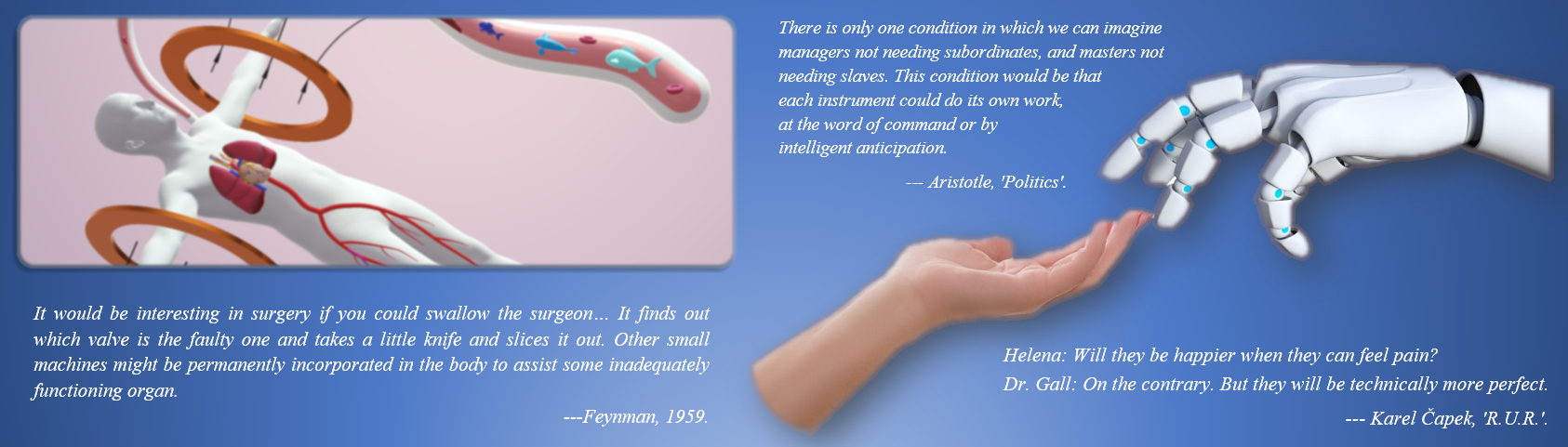
What’s the Future of Robotics? As robots become increasingly embedded in our daily lives and industrial ecosystems, they must transcend mechanical precision to embody intelligence, adaptability, and interdisciplinary collaboration. At Mevita Robotics Lab, we envision a future where robots co-evolve with humans—learning from dynamic environments, interacting seamlessly across domains, and contributing meaningfully to complex societal challenges. This transformation requires robotic systems that are not only technically advanced but also context-aware, emotionally responsive, and socially integrated.
The name “Mevita” derives from Meta and Vita—symbolizing the convergence of abstract intelligence (meta) with embodied life (vita). It reflects our commitment to developing Mindful, Embodied, Versatile, Intelligent, Tactile, and Adaptive robotic systems. Our research spans embodied AI, tactile sensing, autonomous mobility, and human-robot interaction, with applications in healthcare, manufacturing, and smart cities. We build upon integrated systems, intelligent algorithms, and bio-inspired designs, driven by a deeply interdisciplinary team that bridges engineering, artificial intelligence, neuroscience, and design. By advancing both fundamental science and transformative technologies, we aim to create robots that are effective not only in controlled settings but also in the unpredictable real world.
We welcome collaboration across academia, industry, and government to push the boundaries of intelligent robotics. Together, we strive to develop adaptive, impactful solutions that address the evolving needs of society. Join us in shaping a future where machines move, feel, and think with purpose.
On-going Research:
Biomedical Robots (Micro/Nano- and Meso-scale): At Mevita Robotics Lab, we engineer and guide miniaturized robotic systems capable of performing biopsies, diagnostics, and therapeutic interventions within the human body. Our goal is to redefine biomedical tools by developing compact, portable devices for minimally invasive procedures. These systems integrate advanced materials, precision manufacturing, embedded electronics, and AI-driven control to adapt across diverse clinical scenarios. By pioneering functional miniature platforms, we aim to unlock novel therapeutic pathways and elevate the next generation of biomedical devices—enhancing patient comfort, procedural efficiency, and long-term outcomes.
AI-Enhanced Human-Robot Interaction (Macro-scale): We are advancing human-robot interaction through the development of intelligent sensors, adaptive end effectors, and AI-integrated tools that enable robots to perceive, interpret, and respond to complex environments. These innovations empower dexterous manipulation, intuitive collaboration, and seamless integration into human-centric settings. Our research bridges physical embodiment with cognitive intelligence, laying the groundwork for transformative applications in manufacturing, service robotics, and assistive technologies. By translating science fiction into engineered reality, we strive to establish new paradigms of interaction where machines move, feel, and think with purpose.
Foundational Inquiry and Interdisciplinary Exploration: Our research is driven by fundamental questions: How can intelligence be embedded at micro scales? What emergent behaviors arise in simple organisms under stress? How does highly sensory skin encode complex feedback? And how do basic neural architectures yield advanced cognition? These inquiries fuel our interdisciplinary approach, drawing from electrical and mechanical engineering, computer science, materials science, and bio-inspired design. By emulating nature’s mechanisms and integrating them into robotic systems, we seek to unravel biological principles, expand our understanding of embodied intelligence, and chart new directions for robotic innovation. With curiosity as our compass, we explore the unknown to shape transformative futures.
10 Selected Publications:
- Hao Ren, Liu Yang, Hong-yuan Chang, Tieshan Zhang, Gen Li, Xiong Yang, Yifeng Tang, Wanfeng Shang, Yajing Shen*, “A Robust and Omnidirectional-sensitive Electronic Antenna for Tactile-induced Perception,” Nature Communications, 16, 3135 (2025).
- Yifeng Tang, Gen Li, Tieshan Zhang, Hao Ren, Xiong Yang, Liu Yang, Dong Guo, Yajing Shen*, “Digital Channel-Enabled Distributed Force Decoding via Small Datasets for Hand-Centric Interactions,” Science Advances, 11, eadt2641 (2025).
- Tieshan Zhang#, Gen Li#, Hao Ren, Liu Yang, Xiong Yang, Rong Tan, Yifeng Tang, Dong Guo, Haoxiang Zhao, Wanfeng Shang, Yajing Shen*, “Sub-Millimeter Fiberscopic Robot with Integrated Maneuvering, Imaging, and Biomedical Operation Abilities,” Nature Communications, 15, 10874 (2024). [Editors’ Highlights: one of the 50 best papers recently published in the area of “Devices”]
- Rong Tan#, Xiong Yang#, Haojian Lu, Yajing Shen*. “One-step formation of polymorphous sperm-like microswimmers by vortex turbulence-assisted microfluidics”, Nature Communications, 15, 4761 (2024). [Editors’ Highlights: one of the 50 best papers recently published in the area of “Applied physics and mathematics”]
- Yuanyuan Yang, Yajing Shen*. “A liquid metal-based module emulating the intelligent preying logic of flytrap”, Nature Communications, 15, 3398 (2024).
- Xiong Yang, Rong Tan, Haojian Lu, Toshio Fukuda, Yajing Shen*. “Milli-scale cellular robots that can reconfigure morphologies and behaviors simultaneously”, Nature Communications, 13, 4156 (2022).
- Panbing Wang#, MAR Al Azad#, Xiong Yang, Paolo R Martelli, Kam Yan Cheung, Jiahai Shi*, Yajing Shen*. “Self-adaptive and efficient propulsion of Ray sperms at different viscosities enabled by heterogeneous dual helixes”, Proceedings of the National Academy of Sciences, 118, e2024329118 (2021).
- Youcan Yan, Zhe Hu, Zhengbao Yang, Wenzhen Yuan, Chaoyang Song, Jia Pan*, Yajing Shen*. “Soft magnetic skin for super-resolution tactile sensing with force self-decoupling”, Science Robotics, 6, eabc8801 (2021). [highlighted by Science in Video]
- Xiong Yang#, Wanfeng Shang#, Haojian Lu, Yanting Liu, Liu Yang, Rong Tan, Xinyu Wu*, Yajing Shen*. “An agglutinate magnetic spray transforms inanimate objects into millirobots for biomedical applications”, Science Robotics, 5, eabc8191 (2020). [featured by CCTV]
- Haojian Lu#, Mei Zhang#, Yuanyuan Yang, Qiang Huang, Toshio Fukuda, Zuankai Wang*, Yajing Shen*. “A bioinspired multilegged soft millirobot that functions in both dry and wet conditions”, Nature Communications, 9, 1-7 (2018). [top 5 most read Nature Communications articles in physics in 2018; top 10 progress in Robotic in China in 2018]
Contact
Prof. Yajing SHEN
Room 2450, 2F, Academic Building
Department of Electronic and Computer Engineering | Robotics Institute
Hong Kong University of Science and Technology
Clear Water Bay, Kowloon, Hong Kong
Tel: +852-2358 5035
Email: eeyajing[at]ust.hk